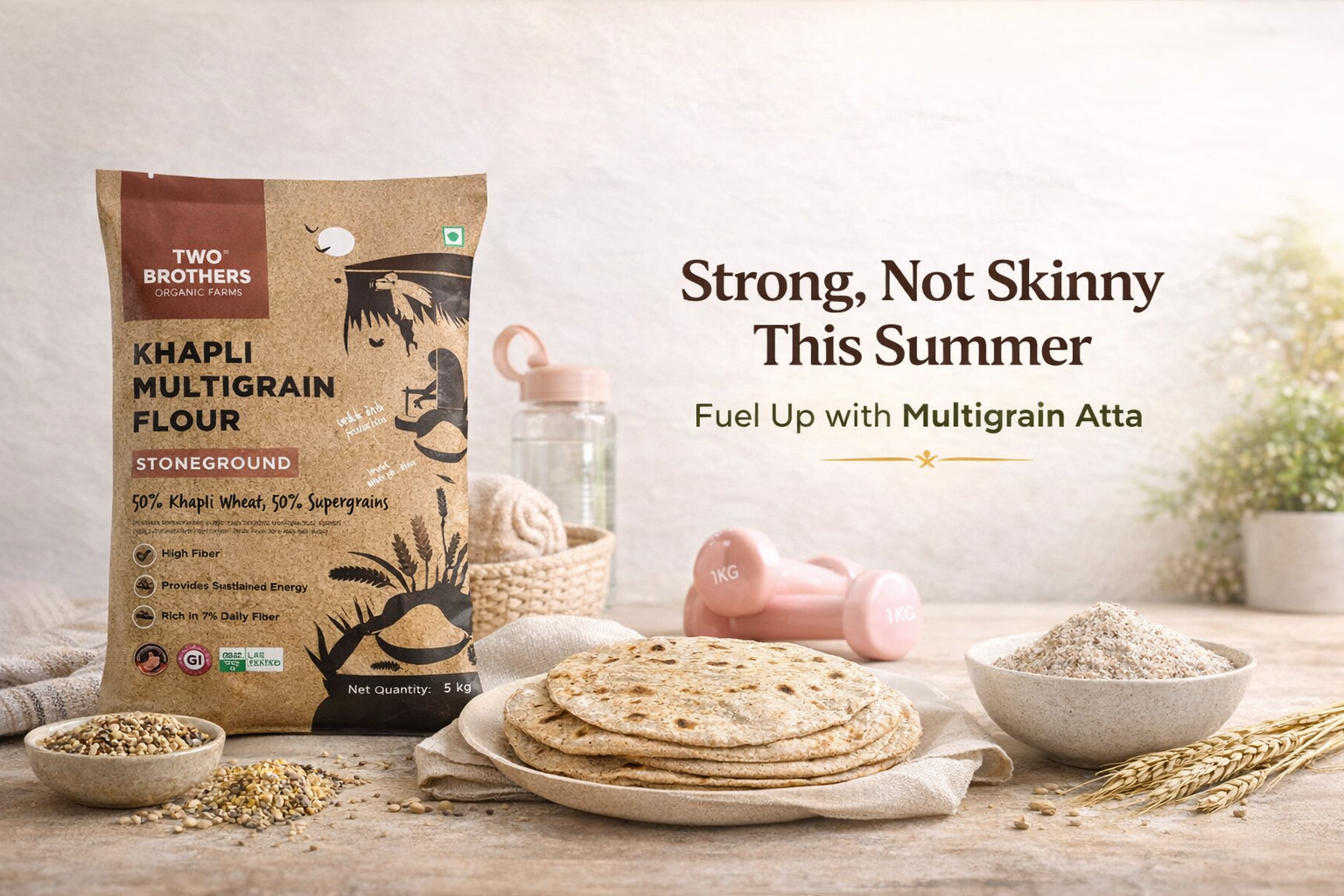





Gym-goers often struggle with finding the right carbohydrates that fuel workouts without causing energy crashes. While protein gets most of the attention in fitness circles, choosing the right carbs can make or break your performance and recovery. Enter khapli wheat flour—an ancient grain that's gaining attention among fitness enthusiasts for its unique nutritional profile and sustained energy release.
What is khapli wheat, and how does this traditional grain fit into modern gym nutrition? Unlike refined flours that spike blood sugar, this low GI atta offers a different approach to fueling your workouts while supporting your protein-rich diet goals.
Key Takeaways
• Khapli wheat flour provides sustained energy through its low glycemic index, preventing energy crashes during workouts
• Higher protein content compared to regular wheat makes it a valuable addition to protein-focused diets
• Rich fiber content supports gut health and nutrient absorption—crucial for muscle recovery
• Stone-ground processing preserves nutrients that are often lost in refined flours
• Versatile ingredient for healthy breakfast recipes and post-workout meals
What is Khapli Wheat and Why Fitness Enthusiasts Are Taking Notice

Khapli wheat, also known as emmer wheat, is an ancient wheat variety that has been cultivated for thousands of years. This native grain represents the farm-to-fork philosophy that prioritizes nutrient density over processing convenience.
Unlike modern wheat varieties that have been hybridized for yield, khapli wheat retains its original genetic structure. This translates to:
- Higher protein content (12-14% vs 10-12% in regular wheat)
- Better amino acid profile supporting muscle synthesis
- Lower gluten content that many find easier to digest
- Rich mineral content including magnesium, zinc, and iron
For gym-goers managing their macronutrients, khapli wheat offers distinct advantages over regular wheat flour in terms of both protein quality and digestibility.
Low GI Atta: The Science Behind Sustained Energy
The glycemic index (GI) measures how quickly foods raise blood sugar levels. Khapli wheat flour typically has a GI of 45-50, compared to 70+ for refined wheat products. This difference is crucial for athletes and fitness enthusiasts.
Why Low GI Matters for Gym Performance
Stable blood sugar = stable energy. When you consume high-GI carbs before a workout, you experience:
- Rapid energy spike followed by a crash
- Increased hunger mid-workout
- Difficulty maintaining intensity during longer sessions
Low GI atta from khapli wheat provides:
✅ Gradual glucose release for sustained energy
✅ Better fat oxidation during cardio sessions
✅ Improved endurance for longer workouts
✅ Enhanced recovery through stable insulin response
This makes khapli flour ideal for healthy breakfast recipes that fuel morning workouts or post-exercise meals that support recovery.
Protein-Rich Diet Integration: Making Khapli Wheat Work

Many fitness enthusiasts worry that adding carbs will interfere with their protein goals. However, strategic carb inclusion actually enhances protein utilization.
The Protein-Carb Synergy
Khapli wheat flour supports protein synthesis through:
- Insulin response that drives amino acids into muscles
- Glycogen replenishment that spares protein for muscle building
- Improved workout performance leading to better training stimulus
Practical Integration Strategies
Pre-workout (1-2 hours before):
- Khapli wheat roti with minimal toppings
- Focus on 20-30g carbs for sustained energy
Post-workout (within 30 minutes):
- Multigrain khapli atta pancakes with protein powder
- Combine 30-40g carbs with 20-25g protein
Daily meals:
- Replace refined grains with khapli-based options
- Maintain your protein targets while improving carb quality
Gut Health and Nutrient Absorption: The Hidden Fitness Factor
Digestive health directly impacts athletic performance through nutrient absorption, inflammation control, and energy metabolism. Khapli wheat flour offers several gut health advantages:
Fiber for Athletic Performance
The higher fiber content in khapli wheat (8-10g per 100g vs 3-4g in refined flour) supports:
- Improved nutrient absorption of vitamins and minerals
- Better satiety preventing overeating
- Stable microbiome reducing inflammation
- Enhanced immune function crucial for consistent training
Easier Digestion
Many athletes experience digestive issues with regular wheat. Khapli wheat's lower gluten content and different protein structure often proves gentler on sensitive digestive systems.
Healthy Breakfast Recipes: Fueling Your Fitness Journey
Breakfast sets the tone for your entire day's nutrition. Here are practical ways to incorporate khapli wheat flour into your morning routine:
High-Protein Khapli Pancakes
- 1 cup khapli wheat flour
- 1 scoop protein powder
- 1 egg + 2 egg whites
- Almond milk as needed
- Cinnamon and vanilla
Post-Workout Khapli Smoothie Bowl
- Khapli flour-based granola
- Greek yogurt
- Seasonal fruits
- Nuts and seeds
Traditional with a Twist
Multigrain masala roti combining khapli wheat with other protein-rich grains creates a complete amino acid profile while maintaining the low GI benefits.
Comparing Carb Options: Why Khapli Wheat Stands Out
| Carb Source | Protein (g/100g) | Glycemic Index | Fiber (g/100g) | Processing Level |
|---|---|---|---|---|
| Refined Wheat | 10-11 | 70-85 | 3-4 | Highly Processed |
| Regular Wheat | 11-12 | 60-70 | 5-6 | Moderately Processed |
| Khapli Wheat | 12-14 | 45-50 | 8-10 | Minimally Processed |
| Oats | 13-15 | 55-60 | 10-11 | Minimally Processed |
Khapli wheat offers the best balance of protein content, low glycemic response, and traditional food wisdom for sustainable healthy eating.
Addressing Common Concerns
"Won't carbs interfere with my cut?"
Quality matters more than quantity. The fiber and protein in khapli wheat flour increase satiety, often leading to natural calorie reduction. Studies show that low GI foods support weight management better than refined alternatives.
"Is it suitable for gluten sensitivity?"
While khapli wheat contains gluten, its different protein structure and lower gluten content make it tolerable for many with mild sensitivities. However, those with celiac disease should avoid it entirely.
"How does it compare to going grain-free?"
Elimination isn't always optimization. For active individuals, strategic carb inclusion supports performance, recovery, and long-term adherence to healthy eating patterns.
Making the Switch: Practical Implementation
Start Gradually
- Replace 25% of regular flour with khapli wheat initially
- Gradually increase to 100% as your palate adjusts
- Monitor energy levels and digestive comfort
Storage and Preparation
- Store stone-ground khapli flour in airtight containers
- Use within 2-3 months for optimal freshness
- Experiment with different hydration levels in recipes
Budget Considerations
While khapli wheat flour costs more than refined alternatives, the nutritional density and satiety factor often result in better value per nutrient.
Conclusion
Khapli wheat flour represents a thoughtful approach to carbohydrate selection for fitness enthusiasts. Its combination of higher protein content, low glycemic index, and superior nutrient profile makes it an excellent addition to protein-rich diets.
The key lies in strategic integration rather than wholesale replacement of your current nutrition plan. By incorporating this ancient grain into your healthy eating routine, you're choosing sustained energy over quick fixes, digestive comfort over convenience, and traditional wisdom validated by modern nutritional science.
Ready to upgrade your carb game? Start with simple swaps in your breakfast routine, monitor your energy levels during workouts, and gradually expand its use based on your body's response. Remember, the best diet is one you can maintain long-term while supporting your fitness goals and overall health.
Consider exploring multigrain khapli options for even greater nutritional diversity, and always prioritize whole food sources that align with your individual needs and preferences.