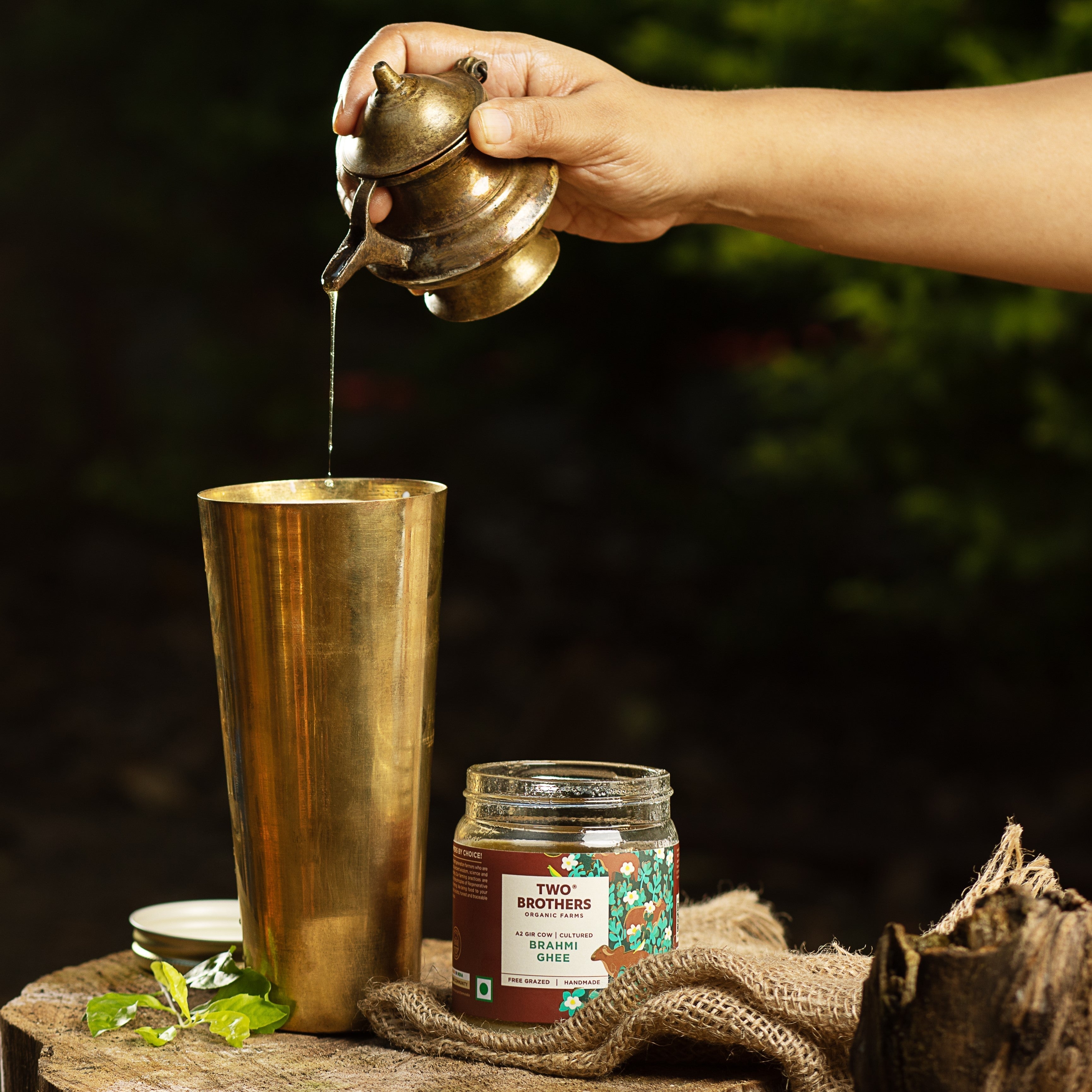





Ghee is a form of clarified butter, made by slowly heating butter until the water content evaporates and the milk solids separate out, leaving behind the butterfat. It's a staple across Indian kitchens, used in cooking, baking, and religious rituals.

How Ghee Is Made — The Bilona Method
The bilona method is a traditional hand-churning process for making ghee. Milk is first converted to curd using a natural starter culture, then hand-churned to separate out butter. That butter is slowly simmered over heat, allowing the water to evaporate and the milk solids to separate, leaving behind golden ghee.
This differs from making ghee directly from cream, a faster, more common commercial method that skips the curd-churning step.
How Ghee Differs from Butter
Because ghee has its water content and milk solids removed, it's shelf-stable at room temperature for longer than butter and has a higher smoke point, which is useful for high-heat cooking. With the milk solids removed, ghee also contains reduced lactose and casein compared to butter — though anyone with a diagnosed dairy allergy or intolerance should check with a doctor before relying on that distinction.

A1 vs. A2 Milk
Ghee can be made from milk containing different types of beta-casein protein — A1 or A2 — depending on the breed of cow. Indigenous Indian cattle breeds, including Gir cows, are commonly associated with primarily A2-type milk.
Culinary Uses
Ghee is used for tempering (tadka), on rotis and parathas, in baking as a butter substitute, and drizzled over dal, khichdi, or rice. Its higher smoke point makes it suited to shallow frying and sautéing at higher temperatures than butter can typically handle.
Storage
Store in a cool, dry place away from direct sunlight, using a dry spoon each time. Because the water and milk solids that would otherwise support spoilage have been removed, ghee doesn't require refrigeration.
FAQs
Is ghee the same as clarified butter?
They're related. Ghee is a form of clarified butter that's simmered for longer, allowing the milk solids to brown slightly before being strained out, which gives ghee its characteristic nutty aroma.
What is the bilona method?
A traditional hand-churning process where curd (not cream) is churned to extract butter, which is then simmered to make ghee.
What's the difference between A1 and A2 ghee?
The distinction refers to the type of beta-casein protein present in the milk used — A1 or A2 — which depends on the breed of cow.
Does ghee need refrigeration?
No. Ghee is shelf-stable at room temperature when stored in a cool, dry place away from sunlight.
Explore TBOF's A2 Gir Cow Ghee, made using the bilona method.