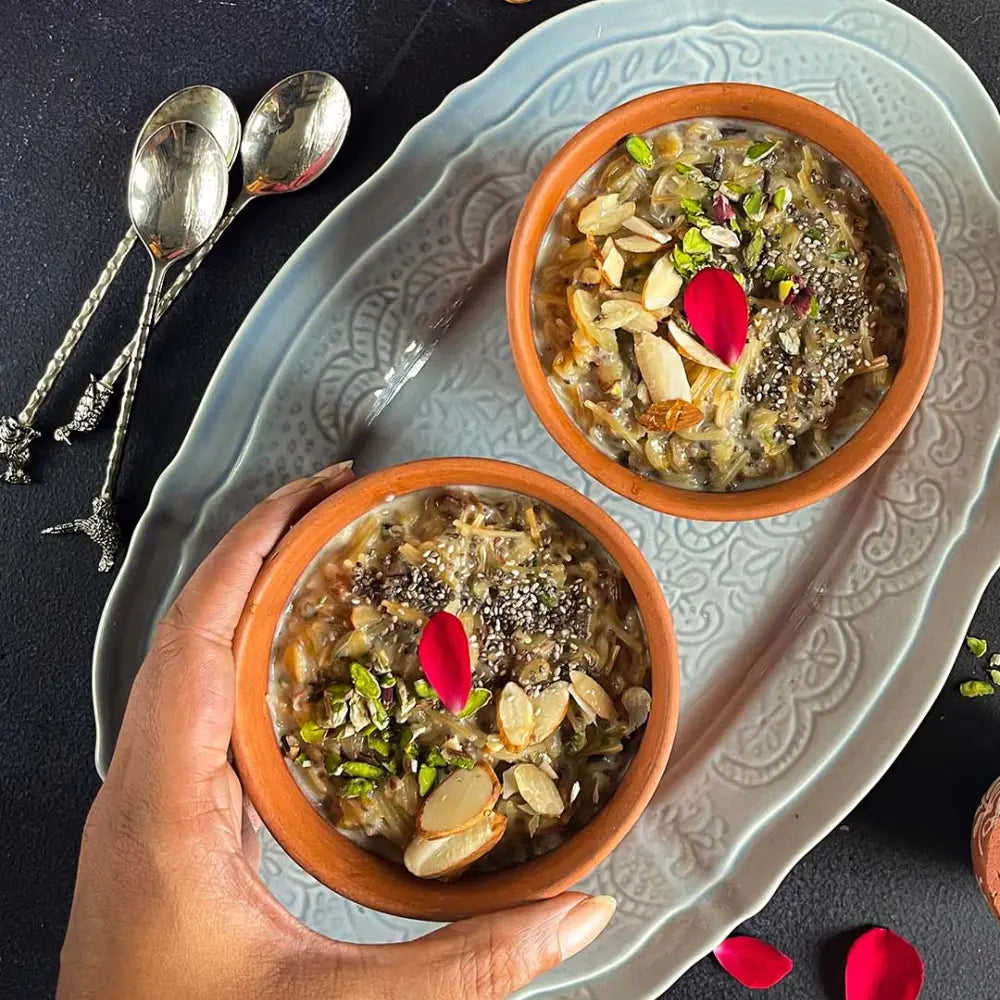





Homemade ‘gajar ka halwa’ is not just a single-person recipe but also a delightful way to spend time with your family. In winter, it becomes a common activity to sit with the family, where elders sip on ‘chai’ while kids grate ‘gajar’ (and sneak a few bites in between). Needless to say, the deliciousness of homemade ‘gajar ka halwa’ is enough to bring families together for it.
Over the years, this few-ingredient pudding has made a name for itself not just in India but globally. Desi ghee 'Gajar ka halwa' fans are everywhere, and they have created many variations of it.

Today, we are sharing how to make ‘gajar ka halwa’ using milk and ‘khoya’, or milkmaid. There’s also a special section dedicated to tips for making perfect carrot pudding and various ways to serve it for a uniquely rich experience for you.
Listen! This recipe takes time, so we better get started with the homemade ‘gajar ka halwa’ recipe now. Our chit-chat can happen in between.
|
Table of Contents
|
Did You Know?
Gajar is not from India, but a vegetable from Afghanistan. It came to India with the Mughals, along with ‘gajar ka halwa’. It has many names– ‘Gajrela’, ‘Gajar pak’, ‘Gajorer halwa’, and so on. It is a traditional ‘Mughlai Mithai’. It is primarily cooked in the northern states of India, specifically in Punjab, Haryana, Uttar Pradesh, Bihar, and Delhi. But it is also enjoyed in Hyderabad and other states too!
It is a delightful feeling when someone asks you, ‘gajar ka halwa khayenge?’, which loosely translates to– “would you like to eat ‘gajar ka halwa’”?
Already drooling?
Pull up your sleeves and get ready to make 'gajar ka halwa' from scratch.
‘Gajar Ka Halwa’ Using ‘Khoya’ or Milkmaid
This recipe is made using ‘khoya’, also known as ‘mawa’ and milk solids. The milk is slowly reduced on a low flame to make ‘khoya’. It takes more time than making this ‘gajar ka halwa’. A quicker way is to use store-bought ‘khoya’ or condensed milk. Still, depending on the quantity, it may take up to 45 minutes to 1 hour to cook this halwa.
Alright, let’s see what else you will need to cook ‘gajar ka halwa’ at home.
Ingredients for 'Gajar Ka Halwa' Using ‘Khoya’
- 800g grated red carrots, or ‘lal gajar’.
- 1 cup ‘Khoya’ or 1 tin condensed milk
- 5 tbsp Desi A2 ghee
- 6 to 9 powdered green cardamoms
- 10 to 12 diced cashews
- 10 to 12 diced almonds
- 1 pinch of saffron strands (optional)
- Sugar or jaggery (based on your preference)
Cooking Instructions For 'Gajar Ka Halwa' Using ‘Khoya’
- Heat a deep kadai or pan on a low, medium flame.
- Add ghee and half of the cardamom powder to the kadai and mix.
- Then, add the grated carrots and mix everything.
- Cook the carrots by closing the lid for a few minutes until they are mushy. Keep stirring in between to avoid burning it at the bottom.
This step will take some time, so hold up!
- When you see ghee on the sides, reduce the flame to low. Then, add the remaining cardamom powder, ‘khoya’, or condensed milk, and mix everything well.
- Keep stirring continuously to avoid splattering, or use a splatter screen.
If you have added ‘khoya’, add the sugar or jaggery now, or the halwa will get all its sweetness from the condensed milk. You can always add a little sugar or jaggery after tasting it at the end to fit it to your liking.
- After some time, the whole mixture will come together and start to look like halwa.
- Once you are happy with the consistency, add the diced dry fruits and cook for another 2 minutes.
- Turn off the flame as the ‘Gajar ka halwa’ is ready to eat!
Now, if you can’t get good-quality ‘Khoya’ or don’t want to add condensed milk; the next recipe is just what you need. You can get the authentic rich flavours of ‘gajar ka halwa’ through milk as well.
Check the next recipe for homemade ‘gajar ka halwa’ using milk.
‘Gajar Ka Halwa’ Using Milk (Without ‘Khoya’)
This recipe brings the flavours of carrots and milk together extremely well. However, the cooking time is longer than in the previous recipe, in which we used ‘khoya’. Let’s get to it then!

Ingredients for 'Gajar Ka Halwa' Using Milk (without ‘Khoya’)
- 800 grams grated carrot, or ‘lal gajar’.
- 5 cups of full-fat organic milk
- 5 tbsp A2 Ghee
- 100g jaggery (as per taste)
- 6 to 9 powdered green cardamoms
- 10 to 12 diced cashews
- 10 to 12 diced almonds
- 1 pinch of saffron strands (optional)
Cooking Instructions For 'Gajar Ka Halwa' Using Milk (without ‘Khoya’)
- Heat a deep kadai or pan on a low, medium flame.
- Add desi ghee and half of the cardamom powder to kadai and mix.
- Then, add the grated carrots, cook them for a few minutes, and add milk.
- Let the whole mixture come to a boil, then reduce the flame.
- Keep on stirring the mixture in between while the carrots soften in the milk.
- After a few minutes of cooking, the milk will start to thicken and continue to cook until it reaches the desired consistency.
Slowly, your house will fill up with the aroma of 'Gajar ka halwa'. It’s almost done. Just a few more minutes.
- When the mixture starts to leave ghee on the sides of the kadhai, it’s time to add sugar and the remaining cardamom powder.
- Give it a good mix and continue to cook on a low flame.
- Don’t forget to stir!
- After the sugar is cooked properly and the halwa thickens up, add the diced cashews, almonds, and saffron.
- Cover the halwa and turn off the stove.
- The delicious 'Gajar ka halwa' is ready; enjoy!
Don’t forget to read how to serve 'Gajar ka halwa' at the end to make it more interesting.
Tips For Cooking Authentic 'Gajar Ka Halwa' Flavours
- Always use a deep, thick-bottomed utensil to cook ‘Gajar ka halwa’, or carrot pudding.
- When using condensed milk, don’t add sugar without tasting. Because condensed milk also has sugar, the halwa can become overly sweet.
- Use good-quality organic A2 ghee to make the halwa.
- Use fresh and juicy red carrots to make ‘gajar ka halwa’.
- Cook the halwa on low to medium heat only for the best taste.
- Always use full cream milk to cook ‘gajar ka halwa’.
‘Gajar ka halwa’ is never made in small quantities. A good amount is cooked and stored in the refrigerator to eat as per wish. So, we thought, why not share interesting ways to serve ‘gajar ka halwa’? This will let you and your family enjoy it more; check them out!
How to Eat ‘Gajar Ka Halwa’?
‘Gajar ka halwa’ can be served in various ways. Here are a few that you might love:
- Serve ‘gajar ka halwa’ warm with a teaspoon of ghee on top. The aroma and flavours of ghee make it more relishing.
- Add a spoonful of fresh milk cream to a bowl of halwa before serving it. The creaminess of fresh creams cuts through the sweetness of ‘gajar ka halwa’ and adds more richness without compromising its taste.
- You can also serve it with vanilla or kulfi ice cream. This combination works great for those who love to eat ice cream in winter.
FAQs: Homemade 'Gajar Ka Halwa' Recipe: A Taste of Tradition
How many days will carrot ‘halwa’ last in the refrigerator?
‘Gajar ka halwa’, or carrot pudding, stays fresh in the refrigerator for up to a week. You can store it in a freezer and consume it for up to a month.
Can I replace milk with coconut milk?
Yes, you can replace it with coconut milk. But the halwa will taste more coconutty and less like carrots. You can also use almond milk to make carrot pudding.
Can I pressure cook ‘gajar ka halwa’?
Yes, you can make ‘gajar ka halwa’ in a pressure cooker. Cook the halwa for a few whistles with milk. Once cooked, remove the lid and cook it until you get a pudding-like consistency.
Which nutrients are found in carrots?
Carrots contain vitamins A, K, and C, beta-carotene, lutein, minerals like potassium, calcium, carbohydrates, and dietary fiber. Carrots are a great addition to your weight-loss, vegan, or keto diet. It is effective in keeping your gut, eyes, and skin healthy.
Conclusion
There’s only one dessert that comes to mind whenever you see carrots– ‘Gajar ka halwa’. Now that the winter season is at its peak, the market is loaded with freshly rooted carrots, and this is the best time to prepare them at home.
Carrot pudding, or ‘gajar ka halwa’, is a nutritious and delicious dessert. It is good for the eyes, digestion, immunity, and bone health. A must-have dessert in winter!
Preparing a delicious ‘gajar ka halwa’ or ‘Gajrela’ depends on the quality of carrots, desi ghee, and ‘khoya’, or milk. You might have to depend on store-bought milk and carrots. However, Two Brothers Organic Farms can provide you the traditionally made organic A2 cow ghee. A2 ghee has a rich earthy flavour and aroma of cultured ghee. Check it out now.