




Most ragi recipes online involve either a porridge or a dosa. Both are good. But ragi is a versatile, deeply flavoured grain that works across the full range of Indian cooking — including the warm, spiced comfort foods that monsoon specifically calls for. These five recipes are tested, practical, and genuinely repeatable.
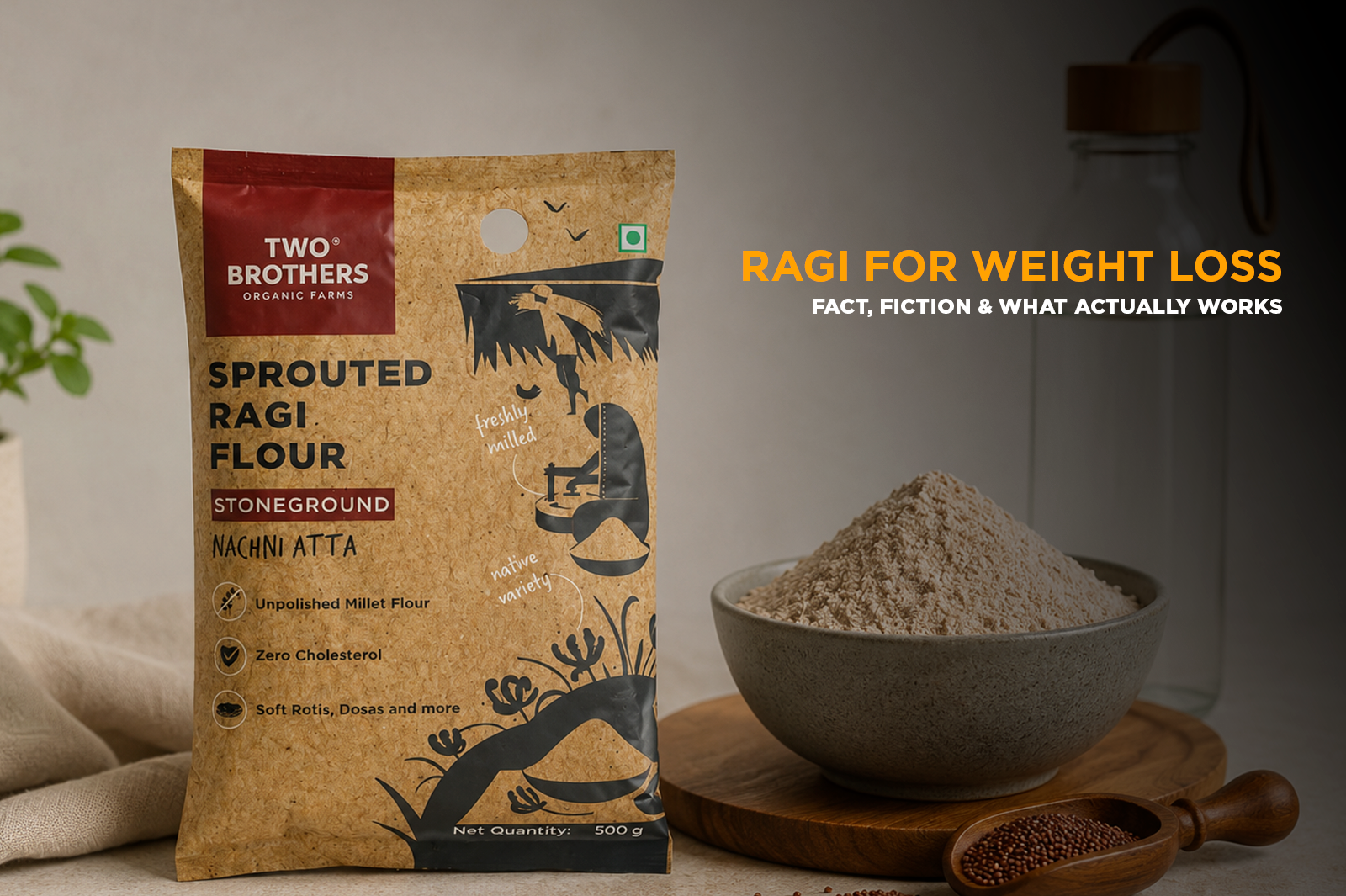
A note on the ragi: Two Brothers' Sprouted Nachni Satva is used throughout these recipes. Sprouting breaks down phytic acid, making the calcium, iron, and zinc in ragi significantly more bioavailable than in unsprouted flour. The flavour is also slightly sweeter and less astringent than non-sprouted ragi. For the complete nutritional science, see our post on Why Sprouted Ragi Is Nutritionally Superior.
Five Recipes for the Monsoon Table
Recipe 01
Ragi Ambil (Spiced Sour Ragi Porridge)
⏱ 15 minutes🍽 Serves 2🌧 Monsoon classic
Ingredients
3 tbsp sprouted ragi flour · 2 cups water · ½ cup chaas (buttermilk) · 1 tsp cumin seeds, roasted and ground · salt · a small piece of tamarind (soaked and pulped) or ½ tsp tamarind paste · 1 tsp ghee · curry leaves (optional)
Method
Mix ragi flour with ½ cup cold water to a lump-free paste. Boil remaining 1.5 cups water. Add ragi paste slowly, stirring constantly. Cook on low heat for 8–10 minutes until thick. Add salt, tamarind pulp, and cumin. Remove from heat, cool slightly, stir in chaas and ghee. Serve warm — not hot.
Ambil is a traditional Karnataka and Maharashtra preparation — fermented-tasting, cooling, and deeply gut-friendly. The tamarind provides sourness (Vitamin C), the buttermilk adds probiotics, the ragi adds the fibre and calcium. The ghee improves fat-soluble nutrient absorption.
Recipe 02
Ragi Dosa (Fermented, Crispy)
⏱ 10 min + 8h ferment🍽 Serves 3–4⭐ Family favourite
Ingredients
1 cup sprouted ragi flour · ¼ cup urad dal (soaked 4 hours, ground to batter) · ½ cup rice flour · 1 tsp methi seeds (soaked with urad) · salt · water · cold-pressed groundnut oil or ghee for cooking
Method
Mix ragi flour, urad dal batter, and rice flour. Add water to pouring consistency. Add salt and methi. Ferment overnight (8–10 hours) in a warm, humid spot — monsoon weather is actually ideal for fermentation. The batter should be slightly tangy and bubbly. Pour thin on a hot tawa, cook one side only until crisp. Serve with coconut chutney and sambar.
Fermentation dramatically increases the protein digestibility of the urad dal and produces organic acids that reduce the glycaemic response of the ragi. This is nutritionally superior to an instant ragi dosa mix.
Recipe 03
Ragi Khichdi (Monsoon Comfort in a Bowl)
⏱ 25 minutes🍽 Serves 3🌧 Rainy evening meal
Ingredients
½ cup ragi flour (coarse) · ½ cup moong dal (yellow, split, washed) · 1 tbsp ghee · 1 tsp cumin + mustard seeds · 1 small onion · 1 tomato · ginger, green chilli · turmeric, salt · 3 cups water · fresh coriander
Method
Heat ghee in a pressure cooker. Add cumin, mustard seeds. Once they splutter, add onion, ginger, chilli — cook 2 minutes. Add tomato, turmeric, salt. Add moong dal and ragi flour, stir 1–2 minutes until lightly roasted. Add water. Pressure cook 2–3 whistles. Rest 5 minutes. Open to a thick, porridge-like consistency. Top with coriander and a small knob of ghee.
Khichdi is India's original gut-healing food. Replacing rice with ragi maintains the comfort while adding ragi's calcium (344mg/100g), iron, and lower GI profile. The combination of ragi's tryptophan + moong dal's complete protein makes this a genuinely restorative monsoon meal.
Recipe 04
Ragi Laddoo (No Sugar, No Maida)
⏱ 20 minutes🍽 Makes 12 laddoos🍫 Healthy snack
Ingredients
1 cup sprouted ragi flour · ¼ cup ghee · 3 tbsp Two Brothers Forest Honey (added after cooling) · 2 tbsp roasted sesame seeds · 2 tbsp desiccated coconut · ¼ tsp cardamom powder · a small pinch of salt
Method
Roast ragi flour in a dry pan on medium heat for 5–7 minutes until it smells nutty and loses its raw taste. Cool completely. Add ghee and mix into the ragi until it resembles wet sand. Add sesame, coconut, cardamom, and salt. Add honey — the mixture should be sticky enough to hold shape. Roll into small balls. Refrigerate for 30 minutes to set. Store in an airtight container up to 5 days at room temperature.
Most commercial ragi laddoos use refined sugar. This version uses raw honey — adding prebiotics, antimicrobial properties, and a more complex sweetness. The sesame adds additional calcium (approximately 975mg/100g) — this laddoo is genuinely one of the most calcium-dense Indian snacks that can be made at home.
Recipe 05
Ragi Soup with Greens (Warming Monsoon Broth)
⏱ 20 minutes🍽 Serves 2🌡 Warming · Immunity
Ingredients
2 tbsp sprouted ragi flour · 2 cups vegetable or thin dal stock · 1 cup chopped spinach or methi · 1 tsp ghee · ½ tsp ginger paste · ½ tsp turmeric · cumin powder · salt · lime juice to finish
Method
Mix ragi flour in ½ cup cold stock until smooth. Heat remaining stock with ghee, ginger, and turmeric. Add greens, cook 2 minutes. Add ragi slurry slowly, stirring continuously to prevent lumps. Simmer 5–6 minutes until the soup thickens. Season with cumin, salt, and a squeeze of lime just before serving.
Ragi soup is an underexplored preparation that delivers all of ragi's benefits in the most digestible, bioavailable form — the liquid suspension means the compounds are quickly absorbed. The lime at the end is critical: Vitamin C from the lime multiplies the absorption of ragi's iron significantly. The ghee ensures fat-soluble vitamins from the greens are absorbed.
Two Brothers Sprouted Ragi Flour (Nachni Satva) — sprouted, stone-ground, gluten-free. Maximum calcium and iron bioavailability. 500g.