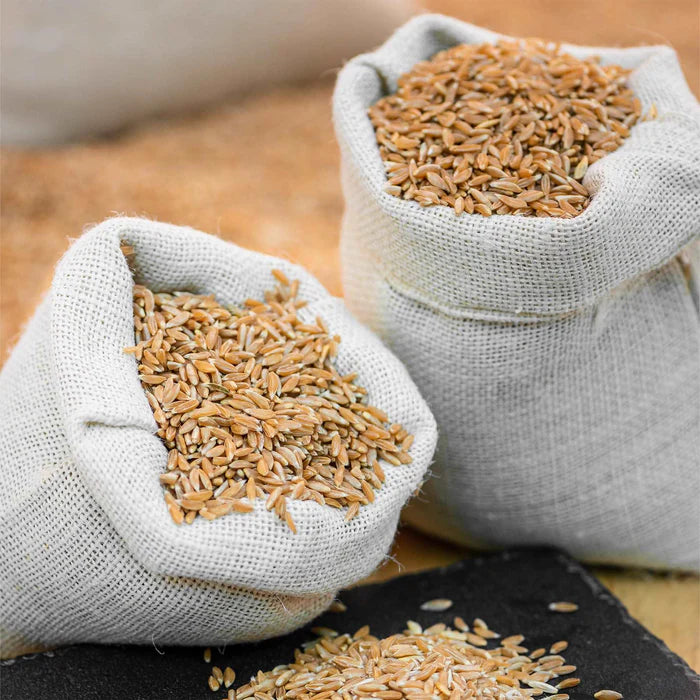





Khapli wheat, also known as emmer wheat, is one of the earliest cultivated wheat species. Its flour has a different composition and milling process from modern common wheat, which shows up in its texture, colour, and how it behaves in a dough.
What Makes Khapli Wheat Different Botanically
Khapli (Triticum dicoccum) is a distinct wheat species from Triticum aestivum, the common wheat used in most modern atta. This botanical difference is what accounts for its different gluten structure and grain hardness.
How Khapli Atta Is Milled
Khapli atta is typically stone-ground, a slower milling method than industrial roller-milling, which keeps the process at lower temperatures and retains the bran and germ throughout.
Gluten Structure
Khapli wheat's gluten differs structurally from modern wheat's, generally described as a weaker gluten network. This affects dough elasticity — khapli dough tends to feel less stretchy while kneading, and rotis made from it have a denser bite.
Texture and Colour
Because khapli is less hybridised than modern wheat, its flour tends to be coarser and darker in colour when stone-ground, compared to the finer, paler texture of commercially milled modern atta.
FAQs
Q1. Is khapli wheat the same species as regular wheat?
No — khapli (Triticum dicoccum) is a distinct wheat species from the common wheat (Triticum aestivum) used in most modern atta.
Q2. Does khapli atta contain gluten?
Yes, it contains gluten, though the structure differs from modern wheat's, generally described as a weaker gluten network.
Q3. Why is khapli atta stone-ground?
Stone-grinding is a slower, lower-temperature milling method that retains the bran and germ throughout the process.
Q4. Where is khapli wheat mainly grown in India?
It's primarily cultivated in parts of Maharashtra and Karnataka.
Explore TBIF's Khapli Emmer Wheat Atta.