Cart
Your cart is empty


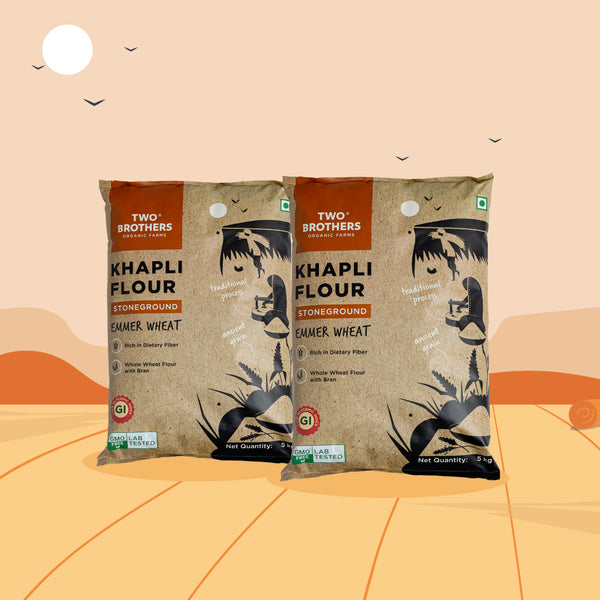
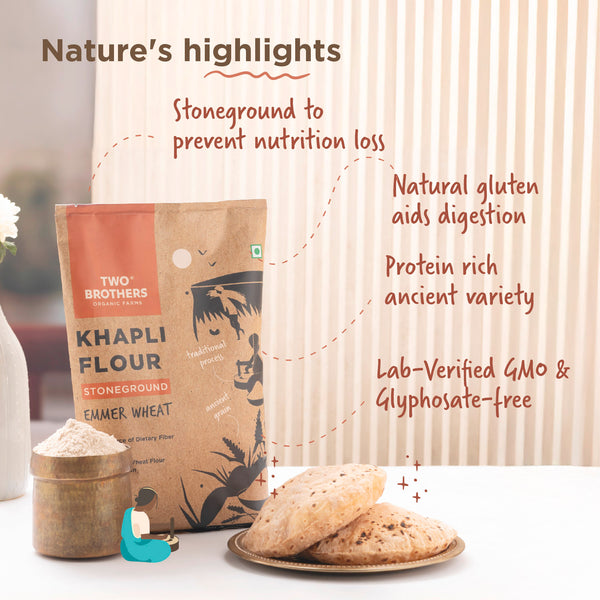
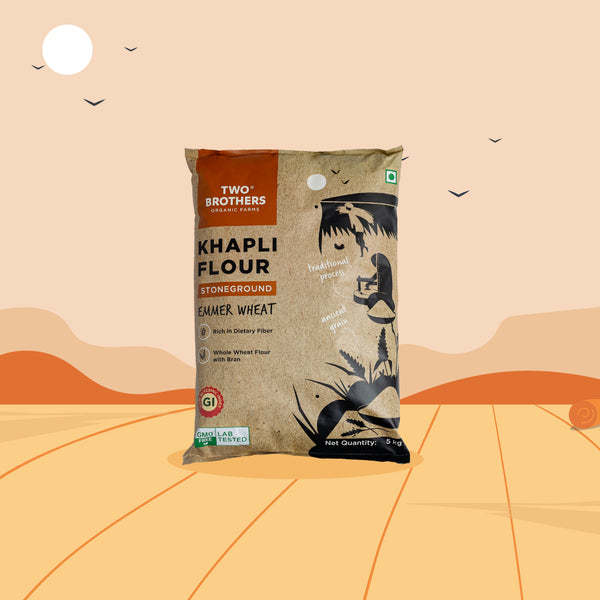
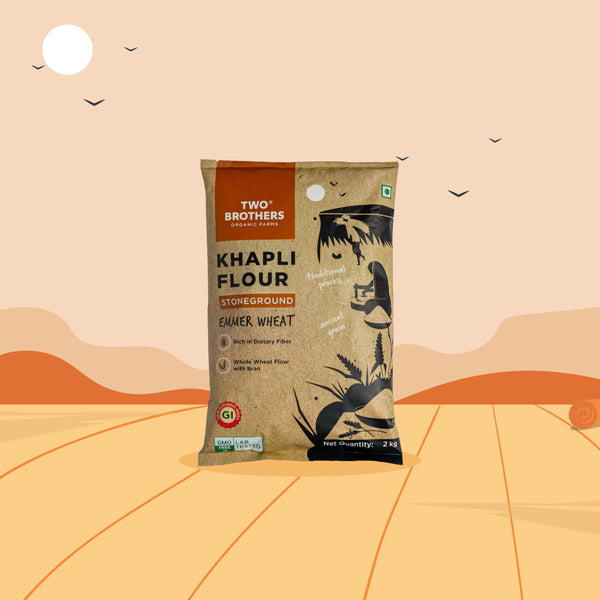


No, Khapli wheat contains gluten and is not suitable for people with celiac disease or severe gluten allergies. However, it has lower gluten content than modern wheat and a different gluten structure that some people with mild gluten sensitivity find easier to digest. Always consult with a healthcare provider if you have gluten-related concerns.
Yes! Khapli atta works wonderfully for rotis, parathas, puris, baking, and most recipes that call for wheat flour. You may need to adjust water quantities slightly, as Khapli flour absorbs moisture differently than regular atta. Start with small adjustments and you'll quickly get a feel for it.
Store in an airtight container in a cool, dry place away from direct sunlight. Because stone-ground Khapli atta retains natural oils from the wheat germ, it's best consumed within 2-3 months of opening for optimal freshness. For longer storage, you can refrigerate or freeze it.
Khapli wheat has a lower glycemic index than regular wheat, making it a better choice for blood sugar management. However, individual responses vary, and people with diabetes should monitor their blood sugar levels and consult with their healthcare provider or nutritionist.
Our Khapli wheat is grown on our certified organic farms in the Deccan Plateau region of India, where this ancient grain has been cultivated for centuries. The soil, climate, and traditional farming knowledge of this region produce exceptional quality Khapli wheat.
We grow our own wheat, stone-grind it in small batches using traditional chakki mills, and ship it fresh to maintain maximum nutrition and flavor. Our commitment to certified organic farming, regenerative soil
practices, and complete transparency sets us apart from mass-market brands.