




Bloating, heaviness, and post-meal sluggishness spike in India during monsoon. Most people blame the humidity, the water, or the fried snacks. The less obvious but more consistent culprit is the wheat atta sitting in every kitchen — specifically, the modern high-gluten variety that has replaced traditional wheat varieties across India over the past 50 years.
This isn't a monsoon-specific problem that suddenly gets better in October. Bloating from modern wheat atta happens year-round. It's just more noticeable in monsoon because the digestive system is already under additional stress from the season — reduced physical activity, heavier foods, and the body's natural shift toward slower digestion in humid weather.
Why Monsoon Makes Digestion Harder
Ayurveda has described this for centuries: the digestive fire (agni) is at its weakest during monsoon. Modern gastroenterology provides the mechanism: high humidity reduces the gut's motility efficiency and increases fermentation of undigested carbohydrates in the large intestine — producing gas and bloating.
The Monsoon Bloating Stack
🌧 Humidity slows gut motility — food moves through the intestines more slowly in humid conditions, increasing the time for fermentation and gas production.
🦠 Pathogen exposure disrupts microbiome — seasonal gut infections and water contamination alter the bacterial balance, often increasing gas-producing species.
🌾 Modern wheat atta's gliadin protein — the most rapidly digested component of modern wheat, it produces a rapid starch breakdown that feeds fermentation in those with any degree of gluten sensitivity (much more common than diagnosed coeliac disease).
🍟 Seasonal fried foods — monsoon pakoras, bhajis, and chai snacking increase dietary fat and refined carbohydrate together, a combination that slows motility significantly.
Each of these factors compounds the others. The atta factor is the one most people haven't addressed — because it requires switching a staple, not just cutting out a snack.
What Makes Modern Wheat Hard to Digest
The wheat on Indian dinner plates today is genetically and compositionally very different from what Indian families ate 60 years ago. The Green Revolution wheat varieties (primarily IARI-bred, now dominating 95%+ of Indian cultivation) were optimised for yield and protein content — specifically, high gliadin and glutenin content for the bread export market.
For the Indian stomach, which has historically handled lower-gluten emmer and einkorn wheats, this shift to high-gliadin modern wheat has had real digestive consequences:
-
Higher gliadin is more rapidly digested and produces a stronger inflammatory response in the gut lining — even in people who do not have diagnosed coeliac disease
-
Lower bran retention in finely milled modern atta reduces fibre, speeding up intestinal transit and reducing the prebiotic effect that feeds beneficial gut bacteria
-
Glyphosate residues in non-certified modern wheat crops have been associated in research with disruption of the gut microbiome
Why Khapli Specifically Reduces Bloating
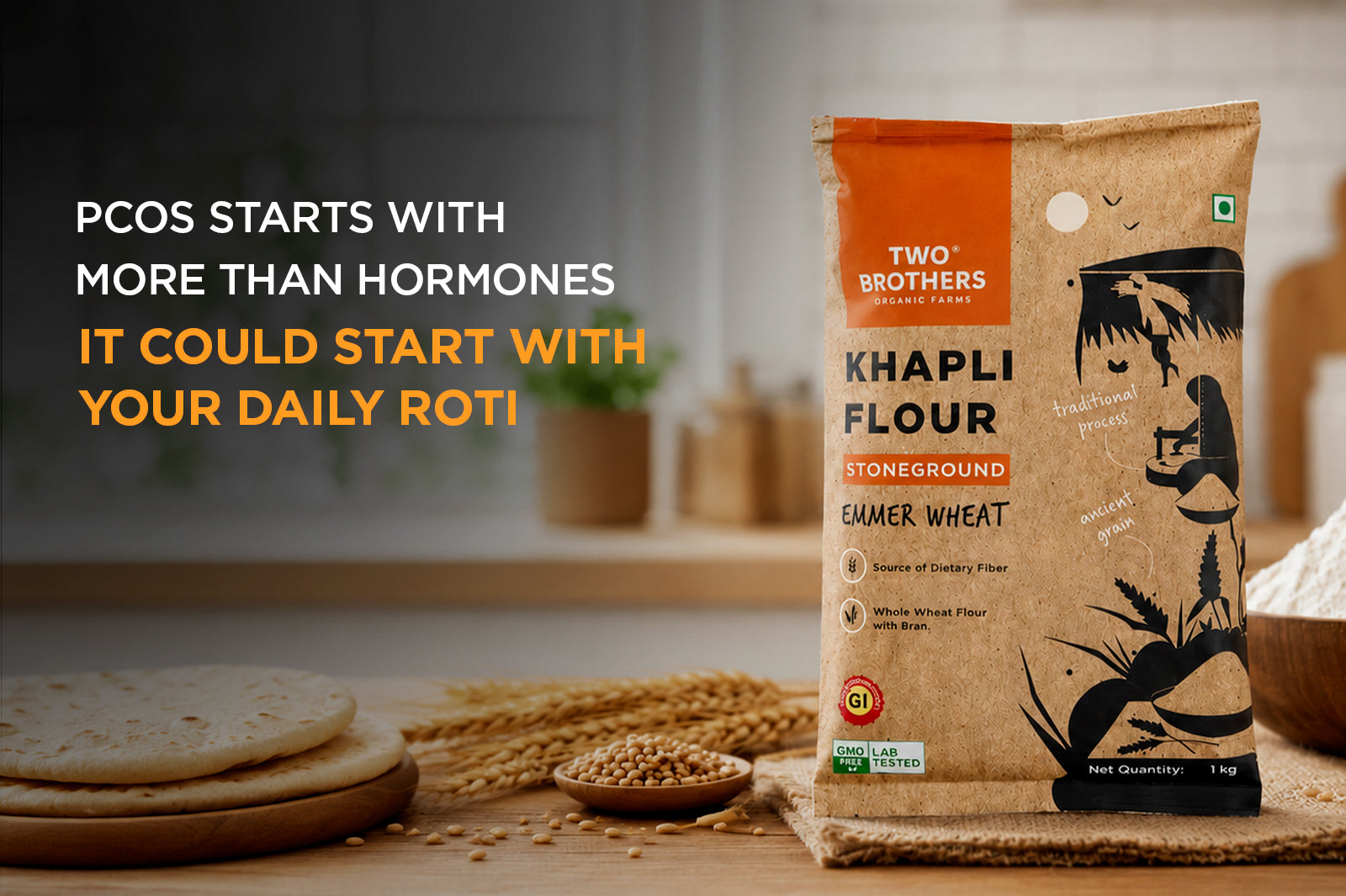
Khapli atta (Triticum dicoccum, emmer wheat) is the ancestral wheat variety that was cultivated across the Deccan plateau for thousands of years before Green Revolution wheat replaced it. Its digestive advantages are structural:
50% Less Gluten — Less Inflammatory Response
Lower gluten content means less gliadin to trigger the gut lining's defence response. For the significant proportion of the Indian population with non-coeliac gluten sensitivity (estimated at 6–10%, far more common than diagnosed coeliac disease at 1%), this alone produces a noticeable reduction in post-roti bloating within 1–2 weeks of switching.
Stone-Ground, Not Roller-Milled
TBOF's Khapli atta is stone-ground, preserving the bran and germ layers. This maintains the dietary fibre that feeds beneficial gut bacteria — the bacteria that produce butyrate, which directly repairs the gut lining and reduces intestinal permeability (the physical mechanism behind bloating and gas).
Glyphosate-Free Certification
Two Brothers Khapli atta carries The Detox Project's glyphosate-free certification — one of the few atta brands in India to do so. See our quality assurance page for full certification details. Since glyphosate exposure is increasingly implicated in gut dysbiosis and microbiome disruption, this matters particularly for people already dealing with gut sensitivity.
Most bloating remedies treat the symptom: gas drops, antacids, digestive enzymes. Switching to Khapli addresses a root cause — the structural composition of the carbohydrate being digested at every meal. It is not a cure, but it is the most consistent single dietary lever available for wheat-related bloating in the Indian context.
Practical Transition Tips
Week 1: Mix 50% Khapli + 50% existing atta. The dough behaves slightly differently — needs more water and a longer rest (10 minutes). The roti is denser and won't puff up the same way. This is normal.
Week 2–3: Move to 100% Khapli. Most people find their digestive comfort noticeably improved by this point. The adjustment period for the gut microbiome to re-calibrate to higher fibre is real — a few days of mild change in bowel pattern at the start is typical, not a problem.
Complement with: A small amount of ghee on the roti (butyric acid in ghee repairs the gut lining), a glass of chaas with meals (probiotics), and minimal refined sugar alongside meals (reduces fermentation substrate for gas-producing bacteria).
For monsoon-specific Khapli recipes that account for the season's digestive needs, see our post on Monsoon Meal Prep with Khapli Atta: 5 Recipes That Hold Up in Humidity.
More from Two Brothers
-
PCOS and Roti: How Switching to Khapli May Help Manage Insulin Resistance →
-
Khapli Atta and Gut Bacteria: Why Ancient Grains Feed Your Microbiome Better →
-
Ghee and the Monsoon Gut: Why Butyric Acid Is Your Most Important Monsoon Nutrient →
Two Brothers Khapli Atta — stone-ground emmer wheat, glyphosate-free certified, GI 40–45. The ancestral wheat for the Indian stomach.
Shop Khapli AttaFrequently Asked Questions
Q1. How quickly will I notice less bloating after switching to Khapli?
Most people with wheat-related bloating notice a change within 7–14 days of switching fully to Khapli. The transition period (days 3–5) may involve a brief change in bowel pattern as the gut microbiome adjusts to higher fibre — this normalises quickly. If bloating persists beyond 3 weeks on Khapli, the cause may be something other than the wheat (dairy, legumes, or a gut condition worth investigating).
Q2. Is Khapli suitable for someone who has already been diagnosed with IBS?
Khapli's lower gliadin content makes it better tolerated than modern wheat for many IBS sufferers. However, IBS has multiple subtypes (IBS-D, IBS-C, IBS-M) and triggers vary significantly between individuals. A low-FODMAP approach may be more relevant for some IBS presentations than simply switching wheat varieties. Khapli is a reasonable trial — if symptoms worsen, it is worth consulting a gastroenterologist about your specific IBS subtype.
Q3. Does Khapli dough need special preparation?
Yes — two adjustments help. First, add slightly more water than you would with standard atta (Khapli absorbs more moisture). Second, rest the dough for 10–15 minutes after kneading before rolling. This rest allows the gluten (lower than modern wheat, but still present) to relax, making the roti easier to roll and less likely to crack. The roti will be slightly thicker and denser than standard atta — this is the point.