




India has one of the world's highest rates of PCOS — an estimated 1 in 5 Indian women of reproductive age are affected. The most common underlying metabolic driver is insulin resistance, which is directly worsened by high-glycaemic foods. The roti eaten at every meal is the single most impactful carbohydrate variable in the Indian diet.
Most PCOS dietary advice focuses on what to eliminate: sugar, refined carbs, processed foods. This article focuses on a more practical intervention for the Indian context — upgrading the atta itself, rather than cutting the roti entirely. Khapli atta, with a glycaemic index of 40–45 versus regular wheat atta's 65–70, addresses insulin resistance at the most consistent touchpoint in the Indian diet: the daily roti.
The Insulin Resistance — PCOS Link
PCOS (Polycystic Ovary Syndrome) is not a single condition but a cluster of hormonal and metabolic irregularities. The most common type — affecting approximately 65–70% of women with PCOS in India — involves insulin resistance as a primary driver. Here is the mechanism:
1.High-GI foods (modern wheat atta, rice, refined sugar) produce rapid blood glucose spikes, requiring the pancreas to produce large amounts of insulin to clear glucose from the blood.
2.Chronically elevated insulin causes cells to downregulate their insulin receptors over time — the cells become "resistant," needing more and more insulin to achieve the same effect.
3.High insulin levels signal the ovaries to produce excess androgens (male sex hormones, particularly testosterone). This is the direct hormonal driver of PCOS symptoms: irregular periods, acne, excess facial hair, and ovarian cysts.
4.Reducing insulin spikes through lower-GI eating lowers the ovarian androgen signal over time. This is why low-GI diets are consistently the most evidence-supported dietary intervention for PCOS — more so than any single supplement.
40–45
Khapli Atta
Low GI — controlled glucose release, lower insulin demand
65–70
Regular Modern Wheat Atta
Medium-High GI — rapid glucose spike, higher insulin demand
Why Khapli's GI Is Lower — and Why It Matters for PCOS Specifically
The glycaemic index difference between Khapli and modern wheat isn't just about bran content. It reflects the grain's fundamental structure — specifically, the gluten architecture and fibre composition.
Lower Gluten, Slower Digestion
Khapli wheat (Triticum dicoccum, emmer wheat) contains approximately 50% less gluten than modern bread wheat — specifically, lower gliadin protein content. Gliadin is the component of gluten that is most rapidly broken down in the small intestine, releasing glucose quickly. Khapli's lower gliadin content slows starch digestion, reducing the rate of glucose entry into the bloodstream. This is not a minor effect — it is one of the primary structural reasons for Khapli's substantially lower GI.
Higher Fibre, Better Insulin Sensitivity
Khapli atta contains approximately 50% more dietary fibre than standard modern wheat atta. Dietary fibre has two mechanisms relevant to insulin resistance:
-
Slows gastric emptying — food leaves the stomach more slowly, reducing the rate of glucose absorption in the small intestine
-
Feeds gut bacteria that produce short-chain fatty acids (SCFAs), which improve insulin sensitivity in the gut lining itself
For women with PCOS, this fibre mechanism is particularly relevant. Research on PCOS and gut microbiome health consistently shows that women with PCOS have lower gut microbiome diversity and lower populations of fibre-fermenting bacteria. The butyrate and propionate produced by these bacteria when fed with fibre directly improve insulin signalling. Khapli's higher fibre content feeds this system consistently with every meal.
Switching from standard wheat atta to Khapli is not a restrictive dietary change — it is a quality upgrade. The roti stays; the metabolic impact of the roti changes substantially. For Indian women eating 2–3 rotis daily, this compounds into a meaningful cumulative glycaemic load reduction over weeks and months.
Related reading
-
Monsoon Bloating? The Atta You're Eating Is Likely the Problem →
-
Khapli Atta and Gut Bacteria: Why Ancient Grains Feed Your Microbiome Better →
-
Moringa Powder for Women: PCOS, Hormones, and Postpartum Recovery →
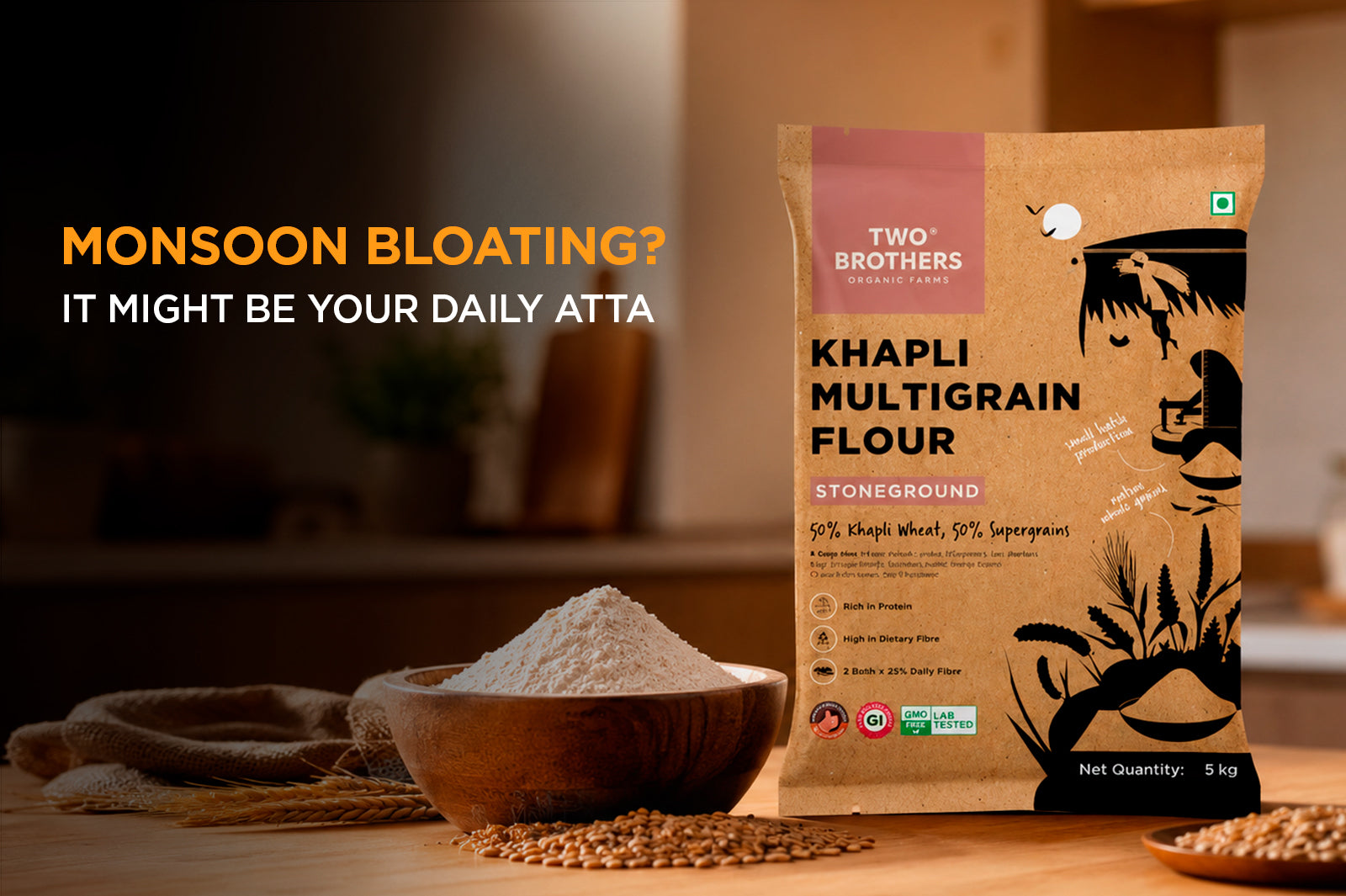
Two Brothers Khapli Atta — stone-ground from ancient emmer wheat, glyphosate-free certified, GI 40–45. Available in 2kg, 5kg, and 10kg.
Frequently Asked Questions
Q1. How long does it take to see hormonal changes from switching to low-GI eating?
Insulin sensitivity typically improves noticeably within 4–8 weeks of sustained low-GI eating combined with other lifestyle changes. Hormonal changes (period regularity, reduction in androgens) lag behind the metabolic changes by several weeks. Most women see meaningful changes in 3–6 months of consistent dietary effort. Switching atta is one piece — not the only piece.
Q2. Is Khapli gluten-free? Can women with gluten sensitivity use it?
Khapli is not gluten-free — it is a wheat variety and contains gluten. It has approximately 50% less gluten than modern wheat, which makes it significantly more tolerable for people with non-coeliac gluten sensitivity. Women with diagnosed coeliac disease should not use Khapli. Ragi flour is a better gluten-free alternative in that case.
Q3. Can Khapli atta be used for parathas and other Indian breads, not just rotis?
Yes — Khapli works for all wheat-based Indian breads. It requires slightly more water than standard atta. The texture is denser and slightly earthier. Most women find the taste preferable after the first 1–2 weeks. The Multigrain Khapli Atta variant (blending Khapli with ragi, jowar, and other grains) is particularly good for thick methi or palak parathas.
Q4. My PCOS is lean PCOS (no weight issues). Is Khapli still relevant?
Yes. Lean PCOS (PCOS without obesity) still involves insulin resistance in the majority of cases — it is just less visible. The insulin mechanism described in this article applies regardless of BMI. Dietary quality, including glycaemic load, matters for lean PCOS management just as much as for PCOS with overweight.