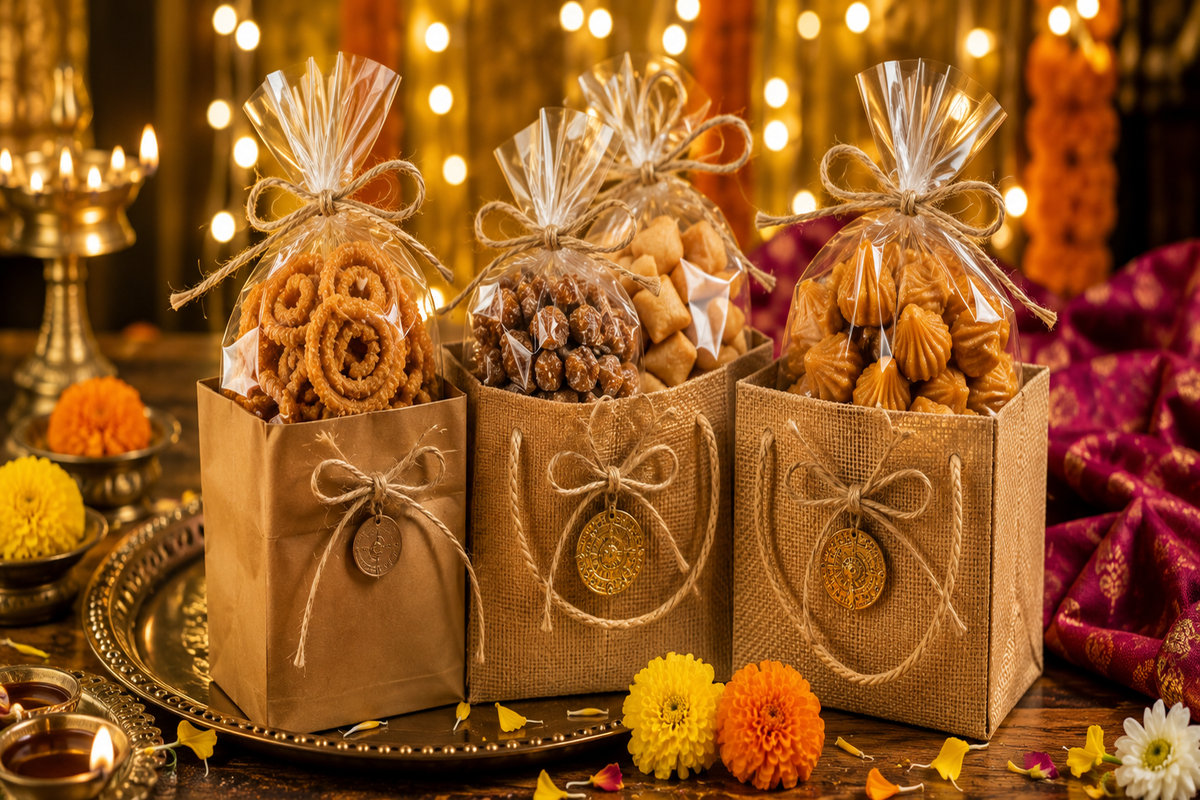





Every Ganpati faral platter tends to have two crunchy staples sitting side by side — one sweet, one savoury. Shankarpale and chakli fill those two roles, and while they're often grouped together as "festival snacks," they're built from completely different ingredients and suit different moods at the table.
At a Glance
| Shankarpale | Chakli | |
|---|---|---|
| Flavour | Lightly sweet | Savoury, spiced |
| Base | Khapli wheat flour, semolina | Rice flour, lentils |
| Cooked in | Cultured ghee | Cold-pressed sunflower oil |
| Sweetened/spiced with | Mishri | Coriander, chilli, cumin, carom |
| Price | ₹189 (MRP ₹215), 150g | ₹260 (MRP ₹295), 250g |

Shankarpale: The Sweet Side
Chakli: The Savoury Side
"Put both on the same platter and you've covered the two things a faral spread is supposed to do — a little sweetness, a little spice."
Which One for Which Moment
Serving guests for tea
Shankarpale pairs naturally with chai — its mild sweetness doesn't compete with the tea, and it's easy to eat a few pieces without feeling like you've had a full snack.
Serving guests for a fuller faral spread
Chakli tends to be the piece people reach for when they want something more substantial and savoury — especially later in the day, alongside other faral items.
Not sure which to pick?
Most households don't choose one over the other — both belong on the same platter, and having both on hand covers guests with either preference.
A Few Questions We Get
Q1. Is chakli very spicy?
It has a balanced blend of spices — flavourful without being overpowering.
Q2. Is shankarpale very sweet?
No, it's a delicately sweet snack, closer to a lightly sweetened biscuit than a full mithai.
Q3. Are either of these fried in palm oil?
No — chakli is fried in cold-pressed sunflower oil; shankarpale is cooked in cultured ghee.
Q4. How long do they stay fresh once opened?
Store both in a cool, dry place away from sunlight, and reseal tightly in an airtight container once opened.