




Whole grains, legumes, fruits and vegetables, and cooking fats each bring a different mix of fibre, protein, and fat to a plate. Rather than singling out one food group as superior, it helps to understand what each one is actually made of and how that composition plays out in cooking.
Whole Grains
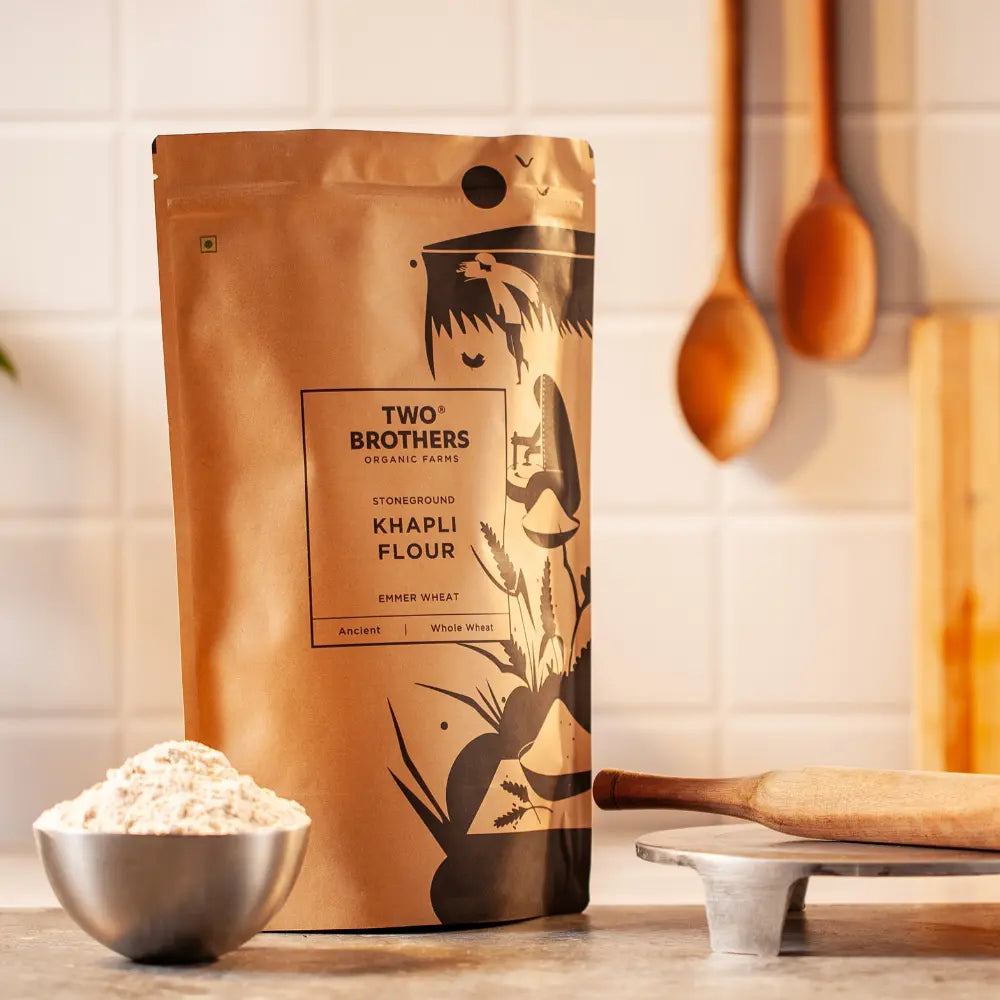
Whole grain flours, including whole wheat atta and khapli (emmer) atta, retain the bran and germ of the grain along with the endosperm. This is what gives whole grain flour its characteristic fibre content and coarser texture compared to refined flour, where the bran and germ are removed during milling.
Legumes
Lentils, beans, and other legumes (collectively called dal in Indian cooking) are a plant-based source of protein and fibre. They form the base of dishes across virtually every regional Indian cuisine, from simple tadka dal to more elaborate preparations.
Fruits and Vegetables
Fresh produce contributes fibre, water content, and a range of vitamins and minerals that vary by type. Leafy greens, root vegetables, and seasonal fruit each bring a different nutrient mix, which is part of why varied produce intake is generally recommended over relying on one or two vegetables.
Cooking Fats
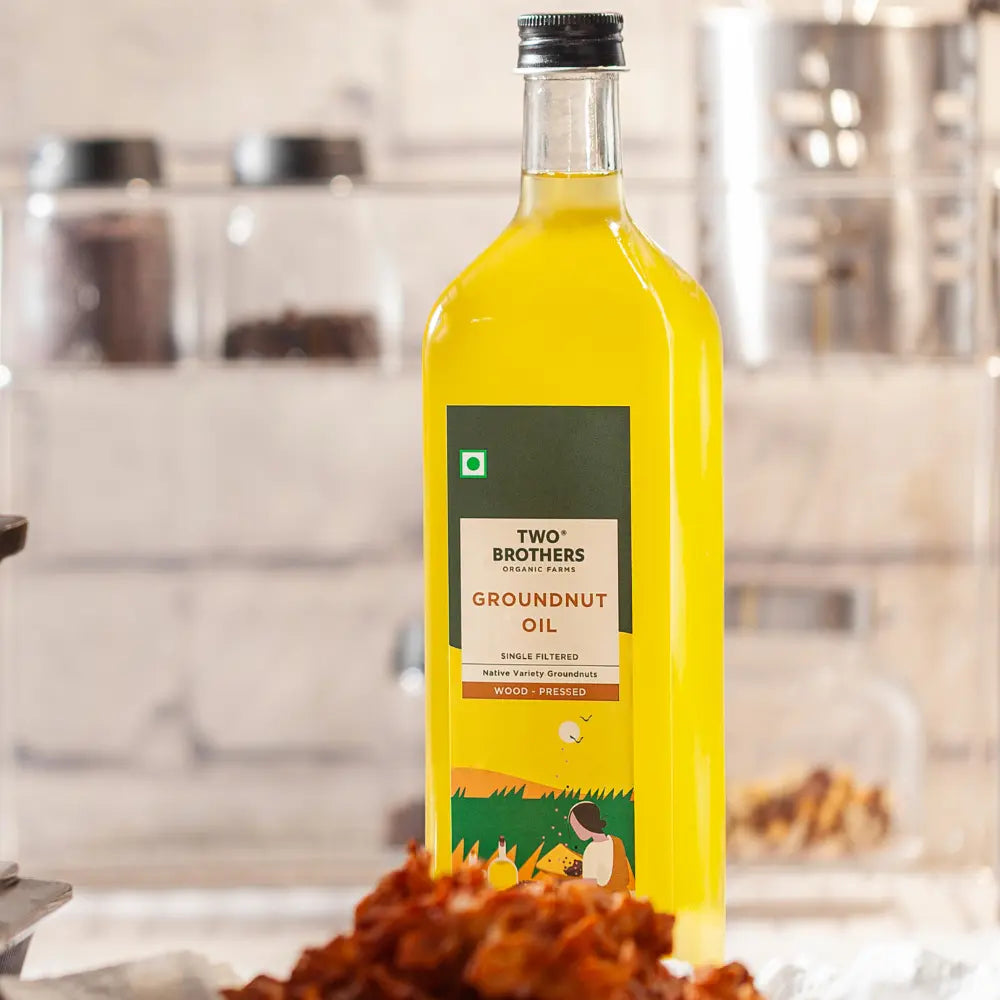
Fats used in Indian cooking — ghee, groundnut oil, mustard oil, and others — differ in their composition of saturated, monounsaturated, and polyunsaturated fats, as well as in smoke point and flavour. Ghee, for instance, is composed largely of saturated and monounsaturated fat and carries fat-soluble vitamins (A, D, E, K) that require dietary fat to be absorbed.
Putting It Together in a Meal
A typical Indian thali illustrates how these groups combine in practice: a whole grain (roti or rice), a legume (dal), a vegetable preparation, and a small amount of fat (ghee or oil) used in cooking or finishing the dish.
FAQs
Q1. What's the nutritional difference between whole grain and refined flour?
Whole grain flour retains the bran and germ, which contributes fibre; refined flour has both removed during milling, giving it a finer texture but less fibre.
Q2. Are all cooking fats nutritionally similar?
No — they differ in their ratio of saturated, monounsaturated, and polyunsaturated fat, as well as smoke point, which affects how they behave in different cooking methods.
Q3. Why are fat-soluble vitamins mentioned alongside cooking fat?
Vitamins A, D, E, and K require dietary fat to be absorbed by the body, which is a general principle of nutrition science, not specific to any one fat source.
Q4. Is there one food group that's most important in a meal?
Most dietary guidance emphasises variety across food groups rather than any single group carrying the whole nutritional load — this is a question best explored with a registered dietitian for individual needs.
Explore TBIF's Khapli Atta and A2 Ghee.